
The visit ends. The week continues.
However often your team visits, what changed since the last one is often reconstructed from memory, from a phone call, or not at all.
Visibility between visits
Add clinical visibility between visits. BPHM reviews each client's personal trends daily and brings your designated care contact a specific concern for follow-up.
Visit schedules and care needs vary widely, from daily support to a weekly check. Whatever the schedule, some of the week happens when nobody from your team is there, and change does not wait for the next visit.
However often your team visits, what changed since the last one is often reconstructed from memory, from a phone call, or not at all.
People downplay how they slept, whether they ate, and how they are breathing, especially when they do not want to worry family or lose independence.
Adult children want to know whether mom is doing worse than last month. Without something continuous, the honest answer is often that nobody really knows.
What BPHM does
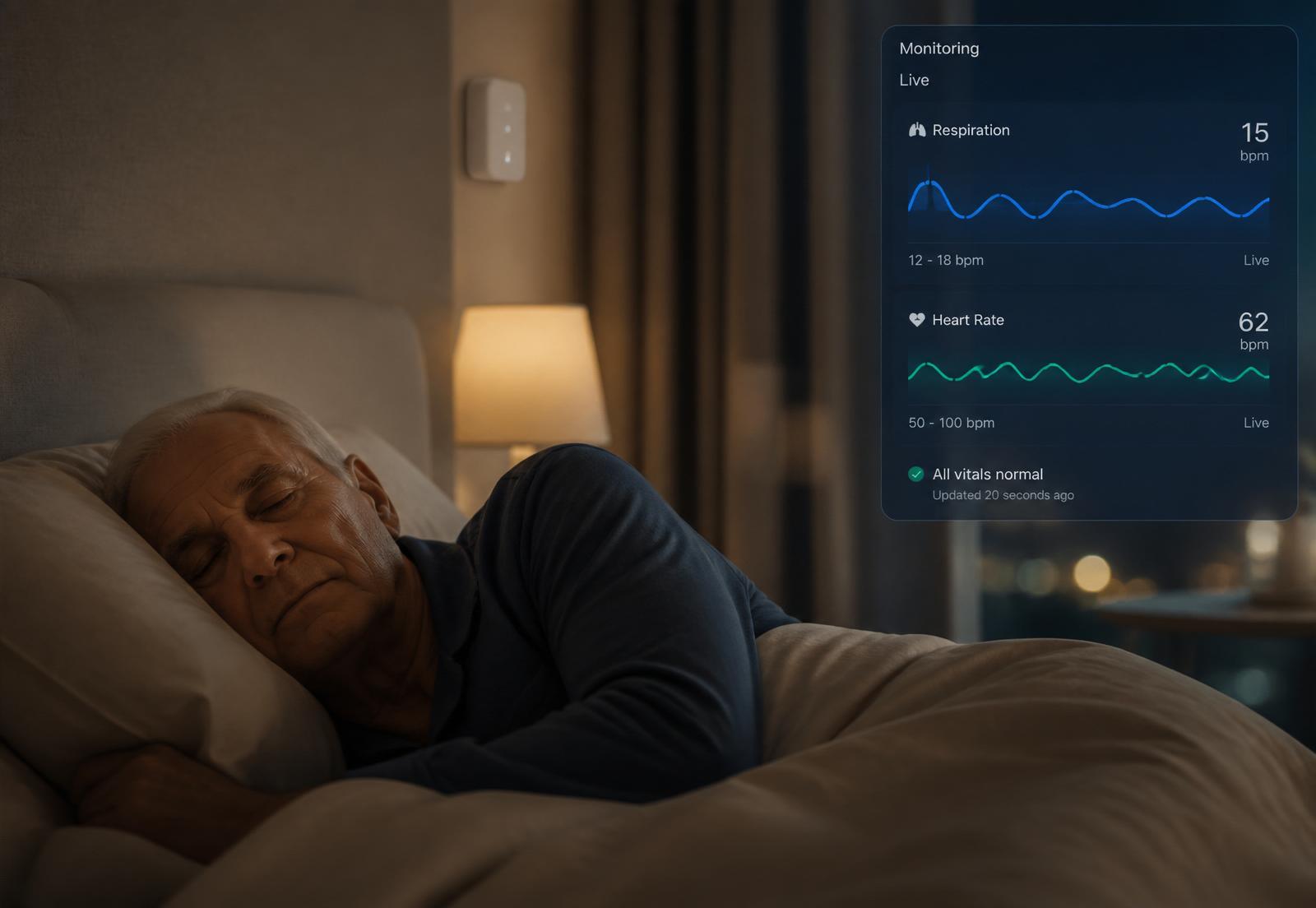
A contactless sensor in the bedroom records resting heart rate, breathing rate and movement patterns continuously. Nothing is worn, nothing is charged, and there is no camera or microphone.
Our clinical team reviews each client's trends daily against protocols signed by our Medical Director. Baselines develop over approximately two weeks of usable readings, and timing varies by client.
When a reviewed change warrants attention, we contact your designated point of contact with a specific request. Your team decides how it fits into the visit schedule and the plan of care.
Where appropriate, the concern goes to the treating provider, who determines any testing or treatment. Every item we raise is closed with a documented outcome.

It records resting heart rate, breathing rate and movement patterns while the client sleeps and moves around the room. No pendant to press, no wristband to charge, no camera in the home.
Our clinical team reviews individual readings in context and follows changes over time. Personal trends help the team identify changes that warrant follow-up, such as a resting heart rate or overnight breathing rate that has moved away from that client's own usual range and stayed there.
Nonclinical caregivers are never put in the position of diagnosing or prescribing. Service fit, response contacts and clinical responsibilities are agreed during onboarding.
Observe, support daily needs, carry out the requested check, and report what they see. They are not asked to interpret readings, diagnose anything, or make treatment decisions.
Review trends, apply physician-signed protocols, and decide what warrants escalation. This is the clinical layer BPHM provides.
Assess the client, order any testing, and determine treatment and changes to the plan of care. Clinical authority stays with them.
Our published pilot observations come from an assisted living community, not from home care. They are early case observations from a single site with no control group, and they should not be read as proof of outcomes in the home. What a home care rollout produces is exactly what we would measure together during a pilot.
Read the pilot findings and limitationsIn a demo we show you the sensor, walk through the clinical review workflow, and talk through fit for your agency and your clients.
Schedule a Demoor call (888) 401-2746